
Bathroom
Small Bathroom Layout Ideas That Maximize Space (2026)
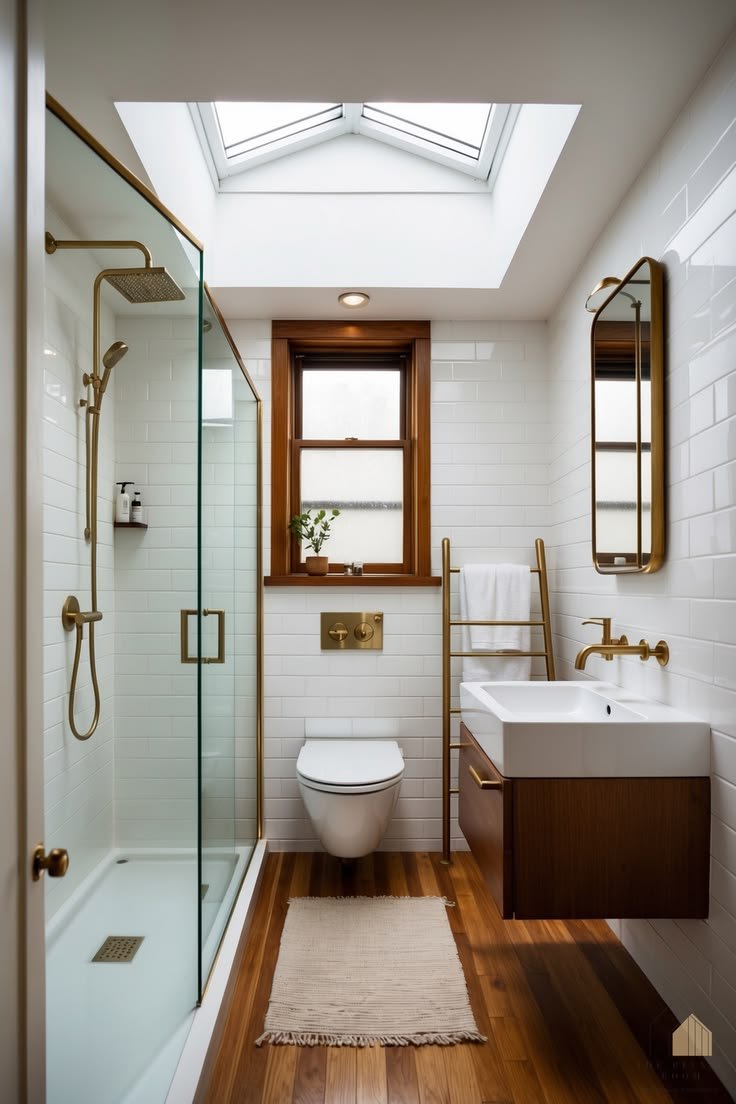
Working with a small bathroom is one of the most common challenges in home design, and it is also one of the most solvable. The key is not about cramming more into the space, it is about choosing the right layout, the right fixtures, and the right storage solutions so that every square foot works harder. Whether you are dealing with a tiny powder room, a narrow galley-style bathroom, or a compact full bath, there is a layout strategy that can make it feel significantly more spacious and functional than it is.
In this guide, we are covering the five most common small bathroom floor plan types, with specific recommendations for fixtures, storage, and design tricks that work in each one. If your bathroom measures anywhere from 35 to 50 square feet, at least one of these layouts will apply to your space.
Layout 1: The Classic 5x7 Bathroom
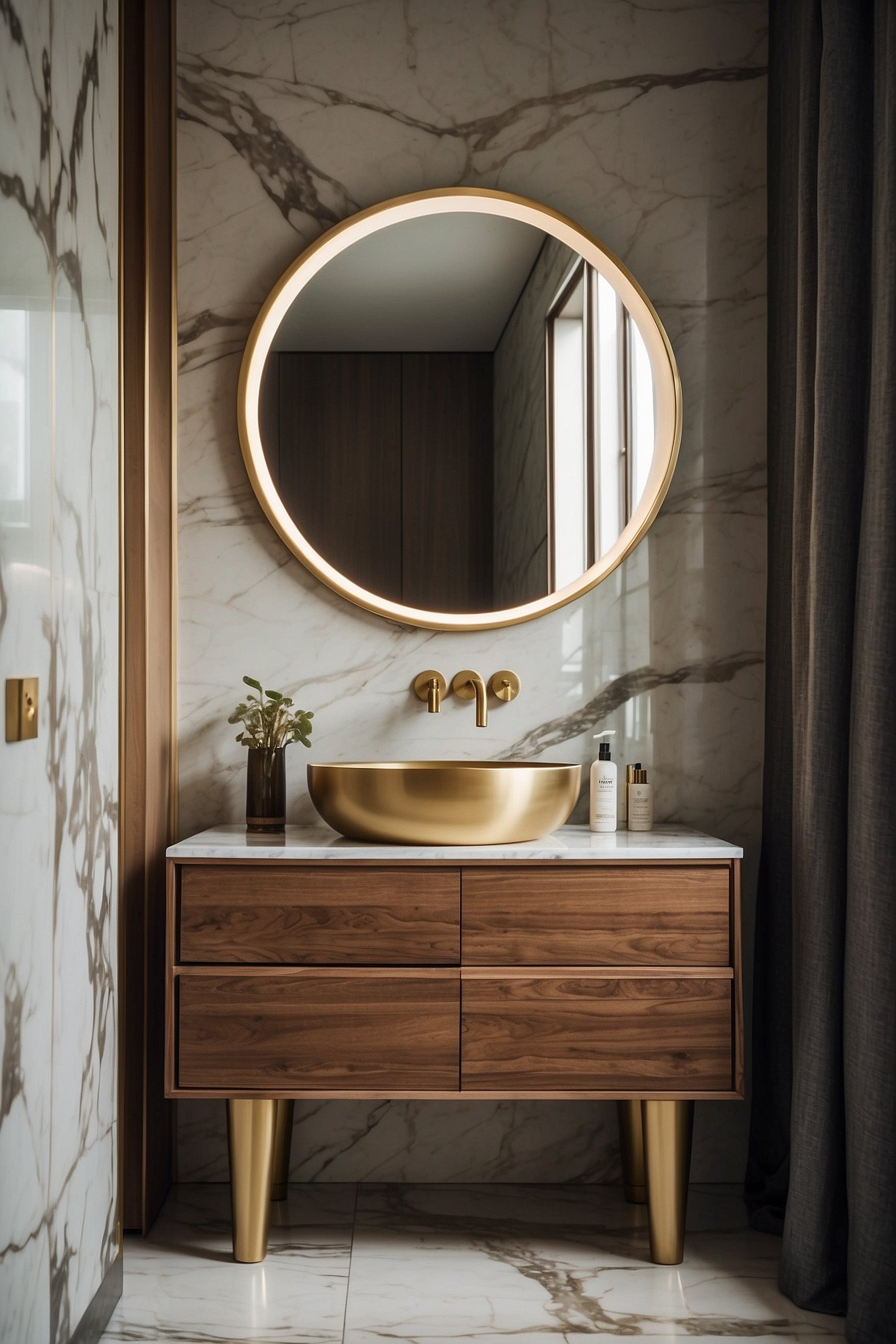
35 Square Feet, The Most Common Small Bathroom
The 5x7 bathroom is the standard small bathroom in most American homes built from the 1950s onward. At 35 square feet, it is tight but workable. The traditional layout places the bathtub or shower along the short (5-foot) wall at the far end, the toilet against one long wall, and the vanity against the other long wall near the door.
This layout works because it keeps the plumbing concentrated on two walls, which is cost-effective for renovations, and it creates a natural traffic flow from the door to each fixture. The biggest mistake people make with a 5x7 bathroom is installing a vanity that is too wide. A 24-inch vanity is the sweet spot for this layout, it provides enough counter and storage space without blocking the walkway to the shower.
Best fixtures for a 5x7:
- 24-inch floating vanity (wall-mounted to expose more floor and make the room feel larger)
- Standard 60x30-inch alcove tub or a 48-inch shower stall if you do not need a tub
- Compact elongated toilet (elongated bowls are more comfortable but take up roughly the same footprint as round when you choose a compact model)
- Recessed medicine cabinet above the vanity to add storage without projecting into the room
Layout 2: The 5x8 Bathroom
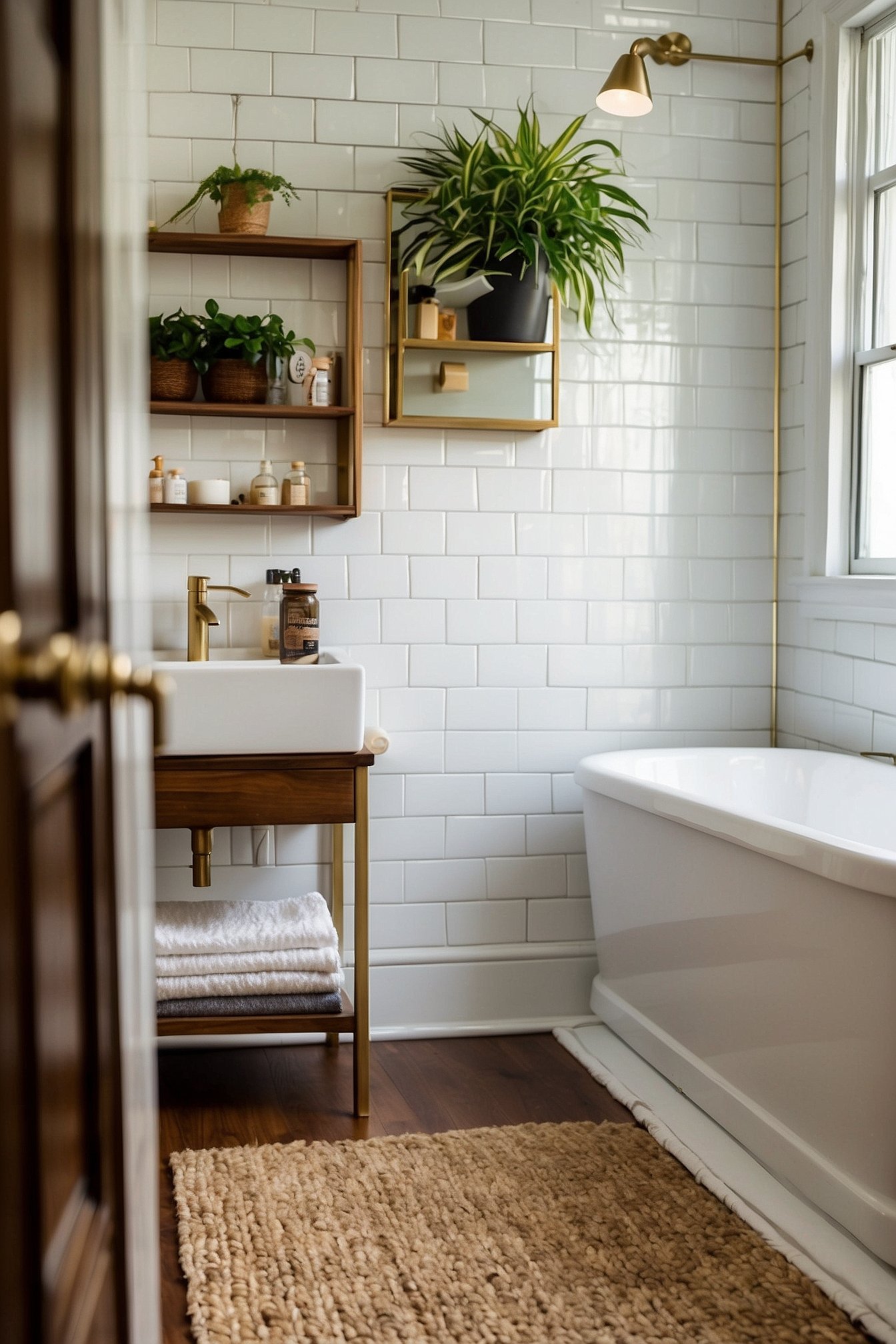
40 Square Feet, Just Enough Room to Breathe
The extra foot of length in a 5x8 bathroom makes more difference than you might expect. That additional 5 square feet gives you room for a slightly wider vanity (30 inches works well here), more comfortable clearance around the toilet, and the option to add a small linen tower or open shelving unit between the vanity and the toilet.
The ideal 5x8 layout keeps the same general arrangement as the 5x7, tub or shower on the short wall, toilet and vanity on the long walls, but with more breathing room between fixtures. The extra length also opens up the possibility of a glass shower door instead of a shower curtain, which makes the room feel much more open by eliminating the visual barrier of an opaque curtain.
Storage tips for a 5x8:
- A slim rolling cart (10 inches wide) fits between the toilet and vanity and holds towels, toilet paper, and toiletries
- An over-the-toilet shelving unit adds three to four shelves of vertical storage without using any floor space
- Adhesive wall-mounted baskets or shelves inside the shower keep products organized without a bulky caddy
Layout 3: The Narrow Galley Bathroom
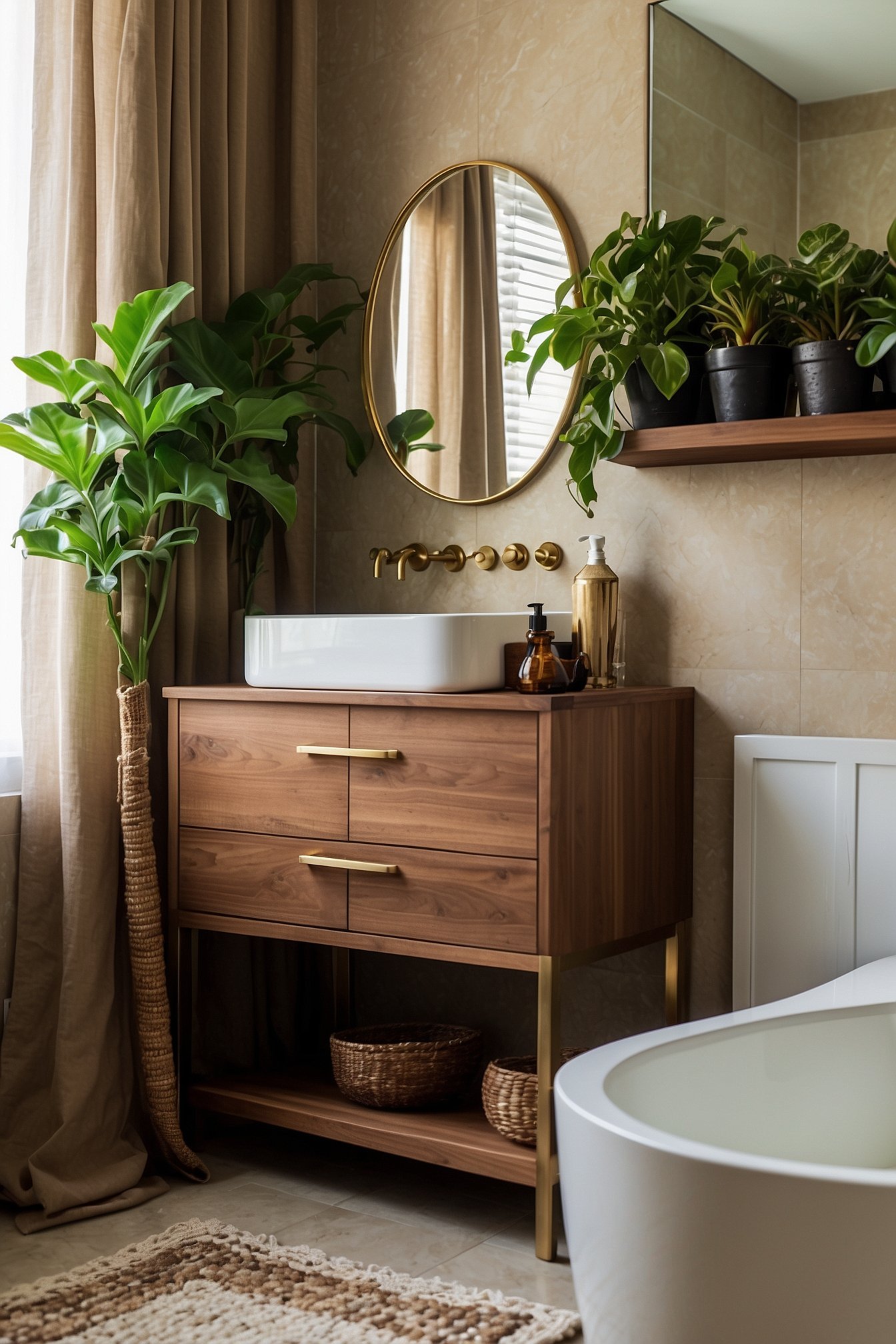
4 Feet Wide or Less, Long and Tight
Narrow bathrooms, typically 3.5 to 4 feet wide and 8 to 10 feet long, are common in older row houses, apartments, and homes where the bathroom was carved out of a hallway or closet. The challenge here is width. Standard 30-inch vanities and standard toilets can make a narrow bathroom feel claustrophobic because the clearances on either side are so tight.
The best approach for a narrow bathroom is to line all fixtures along one wall. Place the shower or tub at the far end (using the full width of the room), the toilet next, and the vanity closest to the door. This creates a single clear walkway along the opposite wall. A wall-mounted vanity is almost essential here because it opens up floor space and makes the narrow corridor feel less cramped.
For narrow bathrooms, choosing a trough-style or wall-mounted sink instead of a traditional vanity can reclaim several inches of width. A pedestal sink is another option, though you lose the storage that a vanity provides. If you go with a pedestal sink, add a small wall-mounted cabinet or a medicine cabinet with interior shelving to compensate.
Design tricks for narrow bathrooms:
- Use large-format tiles on the floor (12x24 or larger) laid lengthwise to visually widen the room
- Install a full-length mirror on one wall to create the illusion of double the width
- Choose a sliding barn door or pocket door instead of a swinging door to save the 30 inches of clearance a swing door requires
- Keep the color palette light and consistent, white or very pale gray on walls, floor, and ceiling
Layout 4: The Corner Bathroom
Irregular Footprint, Working with Angles
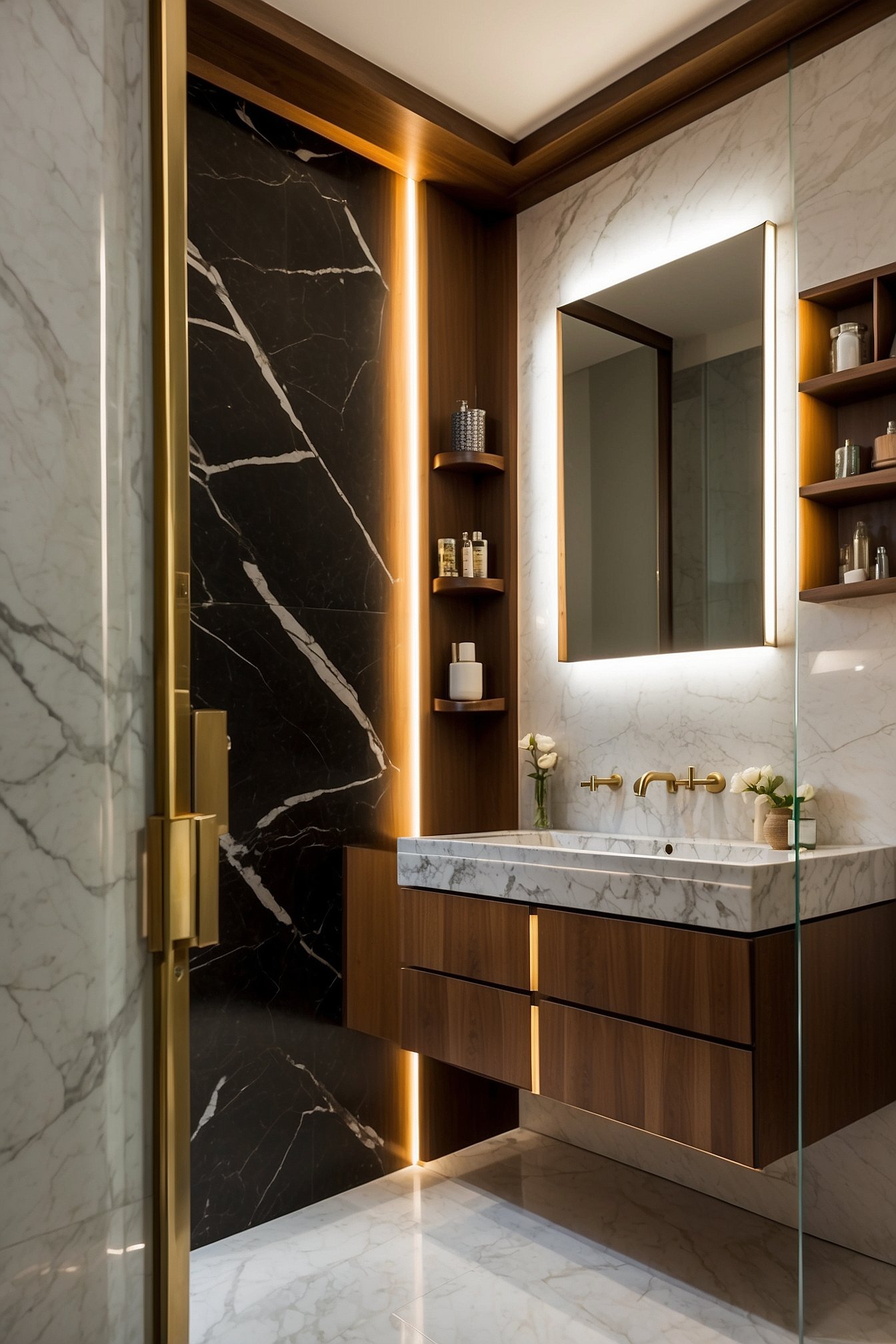
Corner bathrooms, where the room has an angled wall, a tucked-in alcove, or an irregular footprint, are surprisingly common in attic conversions, under-stair bathrooms, and additions. The key to making a corner bathroom work is using the angles to your advantage rather than fighting them.
A corner shower with a neo-angle glass enclosure is the natural fit here. These showers are designed specifically for corner installation and typically have a footprint of 36x36 or 38x38 inches. They tuck into the corner efficiently and the angled glass door opens without interfering with other fixtures.
Place the toilet on the wall adjacent to the shower, and the vanity on the opposite wall or in another corner. If you have a sloped ceiling (common in attic bathrooms), position shorter fixtures like the toilet under the lower section and reserve the taller clearance areas for the shower and vanity where you need to stand upright.
Best fixtures for corner bathrooms:
- Neo-angle corner shower enclosure (36x36 or 38x38 inches)
- Corner vanity or a small triangular shelf unit
- Wall-mounted toilet (saves 8-10 inches of floor depth compared to a standard floor-mounted model)
- Corner medicine cabinet to maximize awkward wall angles
Layout 5: The L-Shaped Bathroom
Two Zones, Separate Wet and Dry Areas
An L-shaped bathroom has two distinct sections that meet at a right angle. This layout is common in master bath additions and renovated homes where the bathroom wraps around a closet or an adjacent room. The advantage of an L-shaped layout is that it naturally creates two zones: a wet zone (shower or tub area) and a dry zone (vanity and toilet area).
The best approach is to lean into this natural separation. Place the shower or tub in the shorter arm of the L, and the vanity and toilet in the longer arm. This keeps water and humidity contained in one section and keeps the vanity area dry and comfortable for daily grooming. If the shorter arm is wide enough (at least 36 inches), a walk-in shower with a linear drain works beautifully and eliminates the need for a bulky shower pan or curb.
The corner where the two arms of the L meet is prime real estate for storage. A tall, narrow linen cabinet or a built-in niche fits perfectly in this inside corner and provides substantial storage without blocking traffic flow. A lazy susan or corner shelf unit can also work here for smaller items like toiletries and cleaning supplies.
Design tips for L-shaped bathrooms:
- Use consistent flooring throughout both sections to visually unify the space
- A glass shower partition (instead of a full enclosure) maintains sight lines and makes the room feel larger
- Consider a double vanity if the longer arm of the L is 8 feet or more, this layout accommodates it well
- Use the inside corner of the L for a tall storage unit, built-in niche, or hamper
Universal Storage Solutions for Small Bathrooms
Regardless of your specific layout, there are a few storage strategies that work in virtually every small bathroom:
Over-the-Door Organizers
The back of the bathroom door is often completely unused space. An over-the-door organizer with pockets or hooks can hold hair tools, cleaning supplies, or extra toiletries. Look for slim, metal-framed options that do not interfere with the door closing properly.
Magnetic Strips and Suction Baskets
Small items like bobby pins, tweezers, and nail clippers can be corralled on a magnetic strip mounted inside a cabinet door. Suction cup baskets inside the shower hold shampoo and soap without permanent mounting. These small additions keep surfaces clear and reduce visual clutter, which is critical in a small space.
Tiered Trays and Risers
On the vanity counter, a two-tiered tray or a riser shelf doubles your usable surface area. Place daily-use items on top and less-used items underneath. This keeps the counter functional without looking cluttered.
Smart Upgrades for Small Bathrooms
A few smart home additions can make a small bathroom feel more luxurious and easier to manage on a daily basis.
The SwitchBot Smart Curtain is a practical upgrade for bathroom windows. In small bathrooms, window treatments need to be compact and functional, you do not have room for bulky curtains or complicated blinds. The SwitchBot attaches to your existing curtain rod and automates the opening and closing on a schedule or via app. Set it to open in the morning for natural light and close in the evening for privacy, without having to reach over a toilet or squeeze past fixtures to adjust curtains manually.
Keeping a small bathroom clean is also more important (and more noticeable) than in a larger space. The SwitchBot Floor Cleaning Robot handles the floor area just outside the bathroom door and in connected hallways, which means less dirt and dust gets tracked into the bathroom on a daily basis. For the bathroom floor itself, a quick weekly mop is all you need when the surrounding areas are being maintained automatically.
Color and Material Tips to Make Small Bathrooms Feel Bigger
Beyond layout and fixtures, the colors and materials you choose have a huge impact on how spacious a small bathroom feels:
- Light colors on walls and floors, white, pale gray, soft beige, and light blue all reflect light and make walls feel like they are receding
- Large-format tiles, fewer grout lines mean fewer visual interruptions, which makes the floor and walls feel more expansive
- Glass shower doors instead of curtains, transparent glass maintains sight lines across the entire room
- Consistent materials, using the same tile on the floor and shower walls creates visual continuity that makes the space feel unified and larger
- Mirrors, a large mirror above the vanity (or even a full wall mirror) effectively doubles the visual depth of the room
Small bathrooms do not have to feel cramped or compromised. With the right layout for your specific floor plan, smart fixture choices, and a few strategic storage solutions, a 35 to 50 square foot bathroom can be just as functional and beautiful as one twice its size. The key is working with your space rather than against it, and letting every element serve double duty wherever possible.
◉ Complete Shopping List
Everything in this guide.
Swipe or tap the arrows to browse. Tap any product to view current pricing.